

Hey there! As a supplier of lightweight solar panels, I often get asked if these nifty little energy - harvesters require special installation. Well, let's dive right into it and find out.
First off, what makes lightweight solar panels so great? They're, well, lightweight! This means they're a whole lot easier to handle compared to traditional solar panels. You can move them around more easily during the installation process, and they put less stress on the structures they're mounted on. Whether you're looking to power up your RV or set up a small off - grid cabin, lightweight solar panels are a top choice.
Let's talk about the installation process. In many ways, installing lightweight solar panels isn't all that different from installing regular ones. You still need to find a spot that gets plenty of sunlight. The sun is, after all, the fuel for these panels, so the more direct sunlight they can soak up, the better. A south - facing location is usually ideal in the Northern Hemisphere, while a north - facing one works well in the Southern Hemisphere.
But here's where things can get a bit different. Lightweight solar panels are often more flexible than their heavier counterparts. Some of them can even be bent to fit curved surfaces. This flexibility opens up a whole new range of installation possibilities. For example, if you have an RV with a slightly curved roof, you can use lightweight solar panels to take advantage of that space. Check out our 100W Solar Panels for RV Campers which are perfect for this kind of setup. They're easy to install and can provide a decent amount of power for your camping adventures.
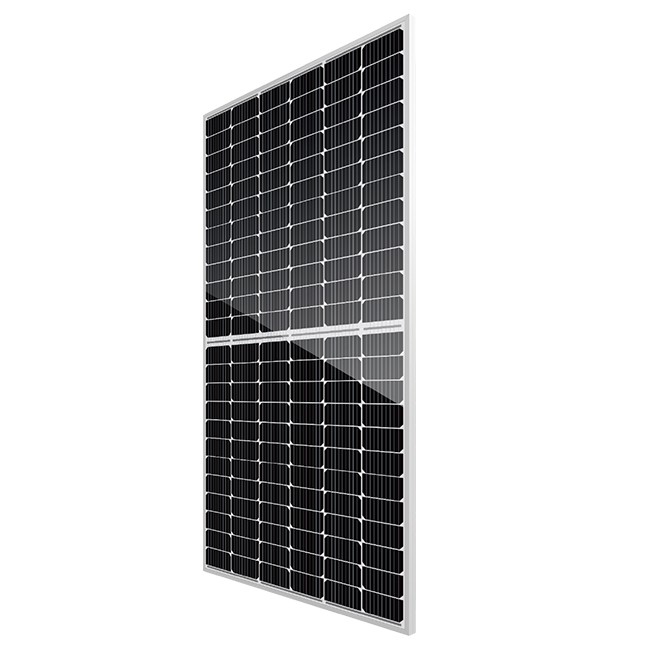
Now, when it comes to mounting, lightweight solar panels usually don't require as much heavy - duty hardware. Since they're lighter, you can often get away with using simpler mounting brackets. This not only makes the installation quicker but also reduces the overall cost. You don't have to invest in expensive, beefy mounts like you might for a Conventional Solar Module 565 - 595W Bifacial Topcon.
However, there are some things you need to be careful about. Even though lightweight solar panels are more flexible, they can be more delicate. You need to handle them with care during installation to avoid any damage. Make sure you clean the surface where you're going to mount the panels properly. Any dirt or debris can affect the adhesion or the connection of the mounting brackets.
Another aspect to consider is the wiring. Just like any solar panel system, proper wiring is crucial. You need to connect the panels in series or parallel to get the right voltage and current for your needs. If you're not familiar with electrical work, it's a good idea to hire a professional. A small mistake in wiring can not only reduce the efficiency of your solar panel system but also pose a safety risk.
Let's take a closer look at the RV application. RV owners love lightweight solar panels because they can add power on the go without adding too much weight. Our 150 Watt Solar Panel for RV is a popular choice. It can be easily installed on the roof of an RV, and it can keep your batteries charged while you're out on the road. You don't have to worry about finding a power hookup at every campsite.
When installing on an RV, you also need to think about the movement. The RV is going to be bumping around on the road, so you need to make sure the panels are securely attached. Use vibration - resistant mounts and check the connections regularly.
For off - grid installations, like in a cabin, the installation process can be a bit more involved. You need to plan for battery storage and an inverter to convert the DC power from the panels into AC power for your appliances. But again, the lightweight nature of these panels makes them easier to transport to remote locations.
Now, do lightweight solar panels require special installation? Well, it depends on your perspective. They don't require a completely different set of skills or tools compared to traditional panels. But they do have some unique features that you need to take into account. Their flexibility and delicacy mean you need to handle them with a bit more care, and their lighter weight allows for simpler mounting solutions.
If you're thinking about installing lightweight solar panels, whether it's for your RV, a cabin, or any other application, I'd be more than happy to help. I've been in the business for a while, and I know all the ins and outs of these panels. Whether you have questions about installation, sizing, or performance, just reach out. We can have a chat about your specific needs and come up with the best solution for you.
In conclusion, lightweight solar panels offer a lot of advantages in terms of installation. They're easier to handle, more flexible, and can be installed in a wider range of locations. But it's important to do your research and make sure you're doing it right. If you have any questions or if you're interested in purchasing our lightweight solar panels, don't hesitate to get in touch. Let's work together to get you on the path to clean, renewable energy.
References
- General knowledge of solar panel technology and installation from industry experience.
- Product specifications and features of lightweight solar panels, 100W Solar Panels for RV Campers, 150 Watt Solar Panel for RV, and Conventional Solar Module 565 - 595W Bifacial Topcon.