

What is the payback period of PERC solar modules?
As a supplier of PERC solar modules, I often get asked about the payback period of these innovative energy - harvesting solutions. Understanding the payback period is crucial for both residential and commercial customers who are considering investing in solar energy. It helps them determine when they will start seeing a return on their investment.
How the Payback Period is Calculated
The payback period of PERC solar modules is calculated by dividing the total cost of the solar installation by the annual savings on electricity bills. The total cost includes the price of the solar panels themselves, installation fees, any necessary permits, and the cost of additional equipment such as inverters and mounting structures.
Let's break down these components. The price of PERC solar modules can vary depending on factors like brand, efficiency, and power output. Higher - efficiency panels generally cost more upfront but can generate more electricity over time, potentially shortening the payback period. Installation fees also differ based on the complexity of the installation, the location of the property, and local labor costs.
For example, if a solar installation costs $15,000 and it results in annual electricity savings of $1,500, the payback period would be 10 years ($15,000 / $1,500 = 10). However, this is a simplified calculation, and in reality, there are many other factors that can influence the payback period.
Factors Affecting the Payback Period
1. Solar Insolation
Solar insolation refers to the amount of sunlight that reaches a specific area. Areas with high solar insolation, such as deserts or regions close to the equator, receive more sunlight throughout the year. PERC solar modules installed in these areas can generate more electricity, leading to greater savings on electricity bills and a shorter payback period.
In contrast, regions with less sunlight, like those with long, cloudy winters, may have a longer payback period. For instance, a solar installation in Arizona, which has high solar insolation, will likely pay back faster than one in Seattle, which is known for its cloudy weather.
2. Electricity Rates
The cost of electricity in your area plays a significant role in determining the payback period. In regions where electricity rates are high, the savings from using solar energy will be more substantial. For example, in some parts of California, where electricity rates can be quite high, the payback period for PERC solar modules may be shorter compared to areas with lower electricity rates.
3. Incentives and Subsidies
Many governments around the world offer incentives and subsidies to encourage the adoption of solar energy. These can include tax credits, rebates, and feed - in tariffs. Tax credits reduce the amount of tax you owe, effectively lowering the overall cost of the solar installation. Rebates are direct cash payments that you receive after the installation. Feed - in tariffs allow you to sell excess electricity generated by your solar panels back to the grid at a favorable rate.
Taking advantage of these incentives can significantly reduce the payback period. For example, if a government offers a 30% tax credit on a $15,000 solar installation, the effective cost of the installation is reduced to $10,500 ($15,000 - ($15,000 * 0.3)). This means that with the same annual savings of $1,500, the payback period is now 7 years ($10,500 / $1,500 = 7).
4. Module Efficiency
PERC (Passivated Emitter Rear Cell) technology has significantly improved the efficiency of solar modules. PERC solar modules can convert a higher percentage of sunlight into electricity compared to conventional solar modules. Higher - efficiency modules generate more electricity from the same amount of sunlight, resulting in greater savings on electricity bills and a shorter payback period.
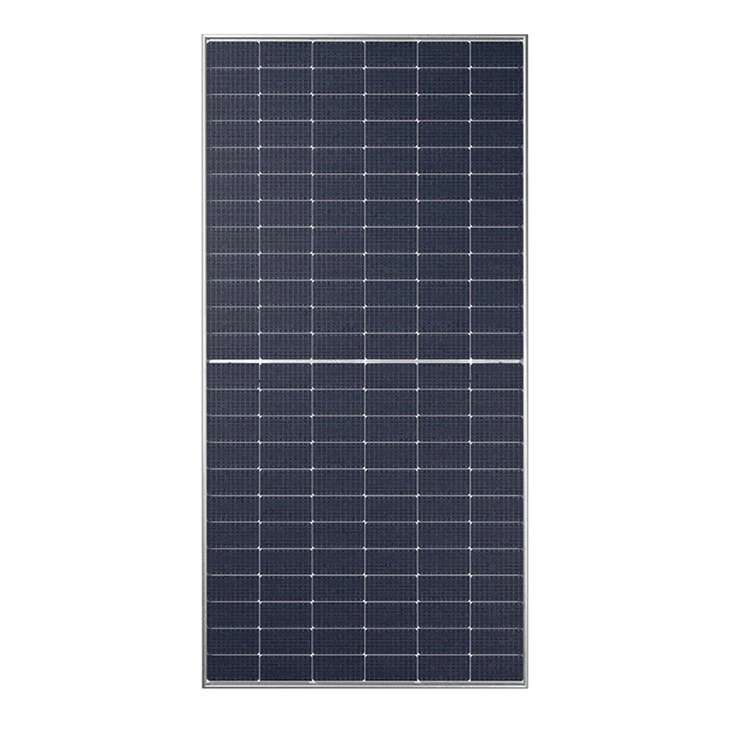
Our Conventional Solar Module 535 - 555W Bifacial PERC is a prime example of high - efficiency PERC technology. These panels can capture sunlight from both the front and the back, further increasing their power output.
Comparing Payback Periods of Different Solar Modules
When considering solar modules, it's important to compare the payback periods of different types. Conventional solar modules may have a lower upfront cost but also a lower efficiency compared to PERC solar modules. This means that they may take longer to pay back.
On the other hand, non - standard solar panels, such as those designed for specific applications like RV campers, may have a different payback period calculation. Our Non - standard Solar Panel is designed to meet the unique energy needs of various customers. For RV campers, the payback period may be influenced by how often they use their RV and the cost of alternative power sources, such as generators.
Our 100W Solar Panels for RV Campers can provide a reliable source of power while on the road. The payback period for these panels will depend on factors like the frequency of RV use, the cost of fuel for generators, and the savings on purchasing portable power sources.
Real - World Examples
Let's look at two real - world examples to illustrate the payback period of PERC solar modules.
Example 1: Residential Installation in a Sunny Region
A homeowner in Phoenix, Arizona, installs a 6kW PERC solar panel system. The total cost of the installation, including panels, installation fees, and equipment, is $18,000. The local electricity rate is $0.15 per kWh, and the system is expected to generate 9,000 kWh of electricity per year. This results in annual savings of $1,350 (9,000 kWh * $0.15 per kWh).
However, the homeowner also takes advantage of a 26% federal tax credit, reducing the effective cost of the installation to $13,320 ($18,000 - ($18,000 * 0.26)). The payback period is then approximately 9.9 years ($13,320 / $1,350 ≈ 9.9).
Example 2: Commercial Installation in a Region with High Electricity Rates
A small business in New York City installs a 20kW PERC solar panel system. The total cost of the installation is $50,000. The local electricity rate is $0.25 per kWh, and the system is expected to generate 30,000 kWh of electricity per year. This results in annual savings of $7,500 (30,000 kWh * $0.25 per kWh).
With a 26% federal tax credit, the effective cost of the installation is $37,000 ($50,000 - ($50,000 * 0.26)). The payback period is approximately 4.9 years ($37,000 / $7,500 ≈ 4.9).
Conclusion
The payback period of PERC solar modules is influenced by a variety of factors, including solar insolation, electricity rates, incentives, and module efficiency. While the upfront cost of a solar installation may seem high, the long - term savings on electricity bills and the environmental benefits make it a worthwhile investment.
If you are considering installing PERC solar modules for your home or business, we encourage you to contact us for a detailed consultation. Our team of experts can help you calculate the payback period based on your specific location, energy needs, and budget. We can also assist you in taking advantage of available incentives and subsidies to maximize your savings.
Don't miss out on the opportunity to switch to clean, renewable energy and start saving on your electricity bills. Contact us today to begin your solar energy journey.
References
- "Solar Energy Basics", U.S. Department of Energy
- "Understanding Solar Payback Periods", National Renewable Energy Laboratory