

Yo, what's up! As a supplier of PERC solar modules, I've been getting a ton of questions lately about the maximum power point tracking (MPPT) performance of our PERC solar modules. So, I thought I'd take a few minutes to break it down for you and give you the lowdown on what makes our modules stand out in terms of MPPT.
First off, let's talk about what MPPT is. In simple terms, MPPT is a technology that allows solar panels to operate at their maximum power output under different environmental conditions. You see, the power output of a solar panel isn't constant. It changes depending on factors like sunlight intensity, temperature, and shading. MPPT controllers are designed to continuously adjust the electrical operating point of the solar panel to ensure that it's always producing the maximum amount of power possible.
Now, when it comes to PERC (Passivated Emitter Rear Cell) solar modules, they've got some pretty sweet advantages when it comes to MPPT performance. PERC technology is all about increasing the efficiency of solar cells by reducing the amount of energy that's lost as heat. This means that PERC modules can generate more power from the same amount of sunlight compared to traditional solar modules.
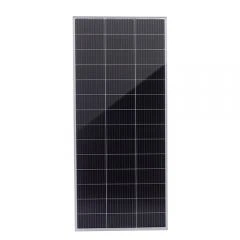
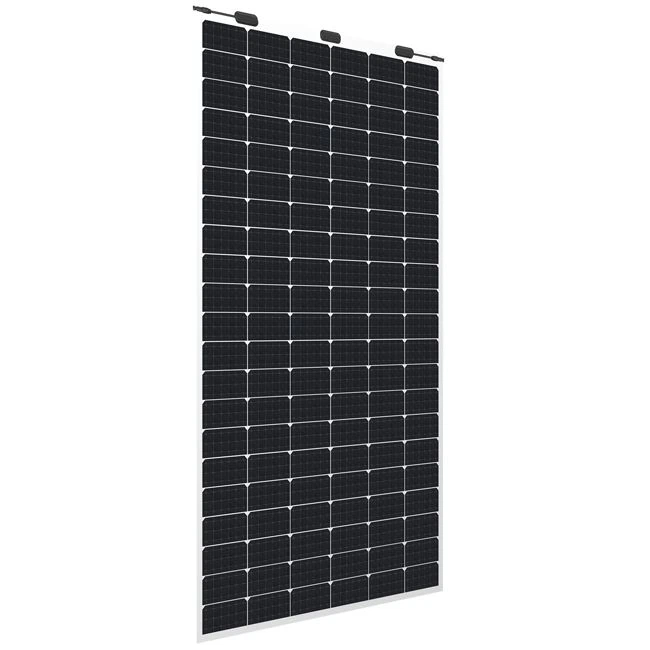
One of the key factors that affects MPPT performance is the ability of the solar panel to respond quickly to changes in environmental conditions. Our PERC solar modules are designed with high - quality materials and advanced manufacturing processes that allow them to adapt rapidly to changes in sunlight intensity and temperature. For example, on a cloudy day, when the sunlight is constantly fluctuating, our modules can quickly adjust their operating point to maintain maximum power output.
Another important aspect is the internal resistance of the solar panel. Lower internal resistance means less power loss within the panel itself. Our PERC modules have a relatively low internal resistance, which means that more of the power generated by the cells can be effectively transferred to the MPPT controller and then to the load. This results in a higher overall efficiency and better MPPT performance.
Let's also talk about how our PERC modules perform under partial shading conditions. Partial shading can be a real headache for solar panel systems because it can create hotspots and reduce the overall power output. However, our PERC modules are equipped with bypass diodes that help to mitigate the effects of partial shading. These diodes allow the current to bypass the shaded cells, ensuring that the unshaded cells can still operate at their maximum power. This feature is crucial for maintaining good MPPT performance, especially in real - world installations where shading from trees, buildings, or other objects is common.
Now, I know you might be thinking, "That's all well and good, but how does this compare to other types of solar modules?" Well, compared to some traditional polycrystalline or monocrystalline modules without PERC technology, our PERC modules generally offer better MPPT performance. They can achieve higher power outputs in a wider range of environmental conditions, which means more energy production over the long term.
If you're in the market for solar panels, you might also be interested in some of our other products. We offer a Flexible Solar Module that's perfect for applications where a rigid panel won't work, like on curved surfaces or in mobile setups. And for those of you with RVs, we've got the 150 Watt Solar Panel for RV and 100W Solar Panels for RV Campers. These panels are designed to provide reliable power for your RV adventures, and they also benefit from the same high - quality PERC technology and great MPPT performance.
In conclusion, the MPPT performance of our PERC solar modules is top - notch. Thanks to the advanced PERC technology, fast response to environmental changes, low internal resistance, and effective bypass diode design, our modules can consistently operate at or near their maximum power output. Whether you're looking to power your home, business, or RV, our PERC solar modules are a great choice.
If you're interested in learning more about our PERC solar modules or have any questions about MPPT performance, don't hesitate to reach out. We're here to help you make the best decision for your solar energy needs. Let's start a conversation and see how we can work together to get you the most out of your solar power system.
References
- Green, M. A., Emery, K., Hishikawa, Y., Warta, W., & Dunlop, E. D. (2014). Solar cell efficiency tables (version 43). Progress in Photovoltaics: Research and Applications, 22(1), 1-9.
- Luque, A., & Hegedus, S. (Eds.). (2003). Handbook of photovoltaic science and engineering. John Wiley & Sons.