

As a supplier of solar powered tricycles, I've witnessed firsthand how weather conditions can have a profound impact on the performance of these eco - friendly vehicles. In this blog, I'll delve into the various ways weather affects the operation of solar powered tricycles and how we, as a supplier, can help customers navigate these challenges.
Sunny Days: The Ideal Weather for Solar Powered Tricycles
Sunlight is the lifeblood of solar powered tricycles. On bright, sunny days, solar panels on the tricycles can generate a significant amount of electricity. The photovoltaic (PV) cells in the solar panels convert sunlight directly into electrical energy. When the sun is shining at its peak, our tricycles equipped with high - efficiency solar panels can soak up a large amount of solar radiation.
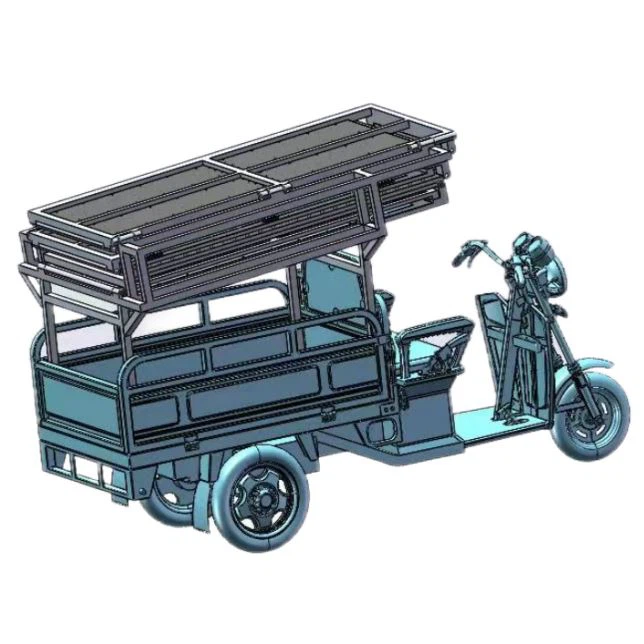
For instance, our Expandable Roof - mounted PV Array for E - Tricycle is designed to maximize sunlight absorption. It can expand to cover a larger area, capturing more sunlight and thus increasing the power output. On a clear summer day with intense sunlight, the tricycle can charge its batteries rapidly, allowing for longer rides and better overall performance. The battery can store the excess energy generated during the day, which can be used later when sunlight is scarce, such as during the evening or on cloudy days.

However, even on sunny days, there are factors that can affect solar panel efficiency. High temperatures can reduce the performance of PV cells. As the temperature of the solar panels rises, their electrical efficiency decreases. This is because the increased heat causes more electrons to move randomly within the PV cells, which can lead to a loss of power output. But our solar panels are designed with advanced cooling technologies to mitigate this effect. They are made of materials that can dissipate heat effectively, ensuring that the tricycle can still perform well even in hot, sunny conditions.
Cloudy and Overcast Days
Cloudy and overcast days present a different set of challenges for solar powered tricycles. When the sky is covered with clouds, the amount of sunlight reaching the solar panels is significantly reduced. The clouds act as a filter, scattering and absorbing a large portion of the solar radiation. As a result, the power output of the solar panels drops.
On a moderately cloudy day, the tricycle may still be able to charge its batteries, but at a much slower rate. The reduced power generation means that the tricycle may have a shorter range and slower acceleration. Riders may notice that the tricycle takes longer to reach its top speed and may need to rely more on the stored battery power.
For customers who frequently ride in areas with a lot of cloudy weather, we recommend our 400 Watt Solar Panel Kit for RV. This kit has a relatively high power output, which can help compensate for the reduced sunlight on cloudy days. It also comes with a more efficient battery management system that can optimize the use of the limited energy generated.
In extremely overcast conditions, such as during heavy rain or thick fog, the solar panels may generate very little or no power at all. In such cases, the tricycle will rely entirely on its battery power. This is why it's crucial for riders to ensure that their batteries are fully charged before setting out on a journey, especially if they expect poor weather conditions.
Rainy and Stormy Weather
Rain and storms can have a dual impact on solar powered tricycles. On one hand, the rain can clean the solar panels, removing dust and dirt that may have accumulated on the surface. A clean solar panel can absorb sunlight more efficiently, which can improve its performance once the rain stops and the sun comes out again.
On the other hand, heavy rain and storms can pose a threat to the tricycle's electrical components. Water can seep into the battery compartments, solar panel connections, and other sensitive parts, causing short - circuits and damage. Our tricycles are designed with waterproofing features to protect these components. The battery compartments are sealed tightly, and the electrical connections are insulated to prevent water from causing any harm.
During a storm, it's advisable for riders to find shelter and wait until the weather improves. Continuing to ride in a storm can not only damage the tricycle but also put the rider at risk. High winds associated with storms can also make it difficult to control the tricycle, especially if it has a large solar panel array on the roof.
Cold Weather
Cold weather can also affect the performance of solar powered tricycles, mainly through its impact on the battery. Batteries, especially lithium - ion batteries commonly used in our tricycles, have reduced performance in cold temperatures. The chemical reactions within the battery slow down, which means that the battery can't deliver power as effectively.
In cold weather, the tricycle may experience reduced acceleration and a shorter range. The battery may also take longer to charge. To combat this, our tricycles are equipped with battery heating systems. These systems keep the battery at an optimal temperature, ensuring that it can perform well even in cold conditions.
Windy Conditions
Windy conditions can have both positive and negative effects on solar powered tricycles. A strong headwind can increase the resistance the tricycle has to overcome, which requires more power from the motor. This can lead to a faster depletion of the battery and a shorter range. On the other hand, a tailwind can assist the tricycle, reducing the power required from the motor and increasing the range.
Our tricycles are designed with aerodynamic shapes to minimize the impact of wind resistance. The streamlined body helps the tricycle cut through the air more easily, reducing the energy needed to move forward. Additionally, the solar panel arrays are positioned in a way that they don't create excessive drag, even in windy conditions.
How We Can Help Customers
As a supplier of solar powered tricycles, we understand the challenges that different weather conditions pose. We offer a range of products and services to help our customers make the most of their tricycles, regardless of the weather.
We provide detailed weather - specific usage guidelines to our customers. These guidelines include tips on how to charge the tricycle's battery effectively in different weather conditions, how to maintain the solar panels, and how to adjust riding habits to optimize performance.
Our customer support team is always available to answer any questions customers may have regarding the impact of weather on their tricycles. We also offer regular maintenance services to ensure that the tricycles are in top - notch condition and can withstand various weather challenges.
If you're interested in purchasing a solar powered tricycle or need more information about how our products perform in different weather conditions, we invite you to contact us for a procurement discussion. We're committed to providing you with the best solutions for your needs.
References
- Duffie, J. A., & Beckman, W. A. (2013). Solar Engineering of Thermal Processes. Wiley.
- Chow, T. T. (2012). Solar Energy Engineering: Processes and Systems. Wiley.
- Markvart, T., & Castaner, L. (2003). Solar Electricity. Elsevier.