

As a supplier of Flexible Solar Modules, I've witnessed firsthand the growing interest in these innovative energy solutions. Flexible solar modules offer unique advantages, such as portability and adaptability, making them suitable for a wide range of applications. One crucial factor that significantly impacts their performance is the angle of sunlight. In this blog, we'll explore how the angle of sunlight affects the performance of flexible solar modules and why it's essential to understand this relationship for optimal energy generation.
Understanding Solar Irradiance and Angle of Incidence
Solar irradiance refers to the power per unit area received from the sun in the form of electromagnetic radiation. The angle at which sunlight strikes a solar panel, known as the angle of incidence, plays a vital role in determining the amount of solar irradiance absorbed by the panel. When sunlight hits a solar panel at a perpendicular angle (90 degrees), the panel receives the maximum amount of solar irradiance, resulting in the highest possible power output. As the angle of incidence deviates from 90 degrees, the effective area of the panel exposed to sunlight decreases, leading to a reduction in power output.
Impact of Sunlight Angle on Flexible Solar Modules
Flexible solar modules are designed to be lightweight, thin, and flexible, allowing them to be easily installed on various surfaces, including curved and irregular ones. However, their performance is still subject to the angle of sunlight. When the sunlight strikes a flexible solar module at an optimal angle, the photons in the sunlight can be efficiently absorbed by the photovoltaic cells, generating electricity. But when the angle of sunlight is not ideal, several factors come into play that can reduce the module's performance.
Reduced Absorption of Sunlight
As the angle of incidence increases, the path length of sunlight through the photovoltaic cells also increases. This means that more photons are scattered or reflected before they can be absorbed by the cells, resulting in a lower absorption rate. Additionally, the effective area of the module exposed to sunlight decreases as the angle of incidence deviates from 90 degrees, further reducing the amount of sunlight that can be absorbed.
Increased Reflection
When sunlight hits a solar panel at an oblique angle, a significant portion of the light is reflected off the surface of the panel. This reflection reduces the amount of sunlight that can be absorbed by the photovoltaic cells, leading to a decrease in power output. The reflectivity of a solar panel depends on several factors, including the surface texture, the type of anti-reflective coating, and the angle of incidence.
Temperature Effects
The angle of sunlight can also affect the temperature of a flexible solar module. When sunlight hits a panel at a perpendicular angle, the heat generated by the absorbed sunlight is evenly distributed across the surface of the panel. However, when the angle of incidence is oblique, the heat is concentrated in a smaller area, leading to a higher temperature in that region. High temperatures can reduce the efficiency of the photovoltaic cells, resulting in a decrease in power output.
Optimizing the Angle of Sunlight for Flexible Solar Modules
To maximize the performance of flexible solar modules, it's essential to optimize the angle of sunlight. Here are some strategies that can help:
Tracking the Sun
One of the most effective ways to optimize the angle of sunlight is to use a solar tracking system. A solar tracking system can automatically adjust the orientation of the solar panel to follow the sun's movement throughout the day, ensuring that the panel receives the maximum amount of sunlight. There are two main types of solar tracking systems: single-axis and dual-axis. Single-axis tracking systems can adjust the panel's orientation along one axis, typically east-west or north-south, while dual-axis tracking systems can adjust the panel's orientation along both axes, providing more precise tracking.
Fixed Mounting at the Optimal Angle
If a solar tracking system is not feasible, the next best option is to mount the flexible solar module at a fixed angle that is optimized for the location. The optimal angle depends on several factors, including the latitude of the location, the time of year, and the type of solar panel. In general, the optimal angle for solar panels in the northern hemisphere is equal to the latitude of the location plus 15 degrees in the winter and minus 15 degrees in the summer.
Using Reflectors
Reflectors can be used to redirect sunlight onto the solar panel, increasing the amount of sunlight that can be absorbed. Reflectors can be made of various materials, such as mirrors, aluminum foil, or white plastic. They can be placed around the solar panel to reflect sunlight onto the panel from different angles, effectively increasing the angle of incidence and improving the panel's performance.
Comparison with Conventional Solar Modules
Conventional solar modules, such as the Conventional Solar Module 540-555W Mono PERC, are typically rigid and mounted on a fixed structure. While they also rely on sunlight to generate electricity, their performance is less affected by the angle of sunlight compared to flexible solar modules. This is because conventional solar modules are designed to be installed at a fixed angle that is optimized for the location, and they have a larger surface area and a more robust structure, which allows them to capture more sunlight.
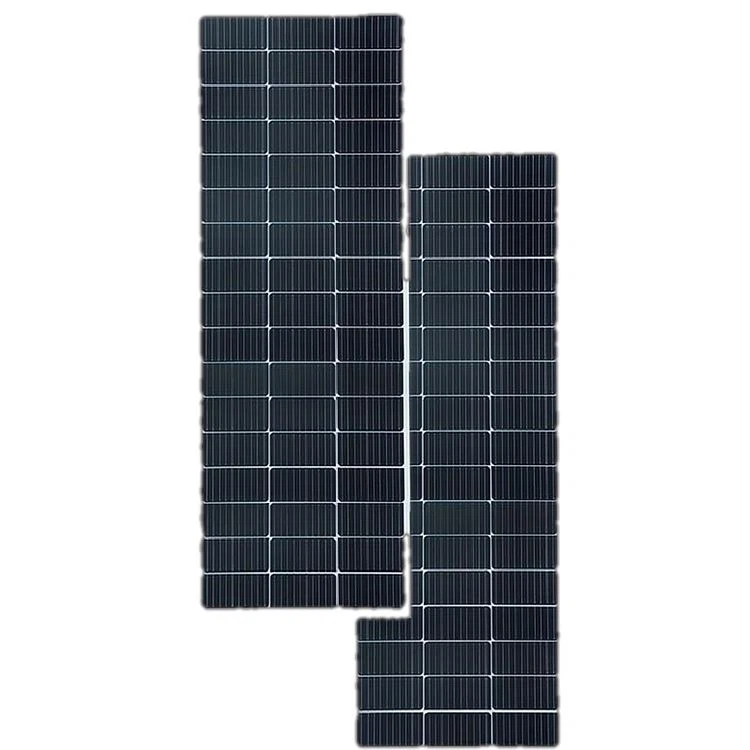
However, flexible solar modules offer several advantages over conventional solar modules, such as portability, flexibility, and ease of installation. They can be easily installed on various surfaces, including curved and irregular ones, making them suitable for a wide range of applications, such as RVs, boats, and off-grid systems. For example, the 150 Watt Solar Panel for RV is a popular choice for RV owners who want to generate their own electricity while on the road.

Conclusion
The angle of sunlight plays a crucial role in the performance of flexible solar modules. By understanding how the angle of sunlight affects the absorption of sunlight, reflection, and temperature, we can optimize the angle of sunlight to maximize the power output of the modules. Whether you choose to use a solar tracking system, mount the module at a fixed angle, or use reflectors, it's essential to consider the specific requirements of your application and the location where the module will be installed.
As a supplier of Flexible Solar Modules, we are committed to providing high-quality products and solutions that meet the needs of our customers. If you're interested in learning more about our flexible solar modules or have any questions about how to optimize the angle of sunlight for your application, please don't hesitate to contact us. We look forward to discussing your requirements and helping you find the best solar solution for your needs.