

How do PERC solar modules handle high - altitude conditions?
As a supplier of PERC solar modules, I've witnessed firsthand the remarkable performance of these advanced solar technologies in a variety of environments. High - altitude regions present a unique set of conditions that can significantly impact the operation of solar panels. In this blog, we'll explore how PERC solar modules are well - equipped to handle high - altitude conditions.
1. Understanding High - Altitude Conditions
High - altitude areas, typically defined as regions above 2,500 meters (8,200 feet) above sea level, have distinct environmental characteristics. The air is thinner, which means there is less atmosphere to filter sunlight. This results in higher levels of solar irradiance reaching the ground compared to lower - altitude areas. On average, for every 1,000 - meter increase in altitude, solar irradiance can increase by about 4 - 5%. Additionally, high - altitude regions often experience large temperature variations between day and night, with cold nights and relatively warm days. The UV radiation is also more intense due to the thinner atmosphere.
2. Advantages of PERC Solar Modules in High - Altitude Conditions
High Efficiency in High Irradiance
PERC (Passivated Emitter and Rear Cell) solar modules are designed to convert sunlight into electricity more efficiently. The technology uses a passivation layer on the rear side of the solar cell, which reduces electron recombination and allows more photons to be converted into electrons. In high - altitude areas with increased solar irradiance, PERC solar modules can take full advantage of the abundant sunlight. They can generate more electricity per unit area compared to traditional solar panels, making them an ideal choice for high - altitude solar power plants.
For example, a standard crystalline silicon solar panel might have an efficiency of around 18 - 20%, while a PERC solar module can achieve efficiencies of 22% or higher. This higher efficiency means that in high - altitude regions with high solar irradiance, PERC solar modules can produce more power output, maximizing the return on investment for solar projects.
Temperature Coefficient
Another important factor in high - altitude environments is the large temperature difference between day and night. PERC solar modules have a relatively low temperature coefficient. The temperature coefficient indicates how much the power output of a solar panel decreases as the temperature increases. A lower temperature coefficient means that the power output of the solar panel is less affected by high temperatures during the day.
In high - altitude areas, where the temperature can rise significantly during the day, PERC solar modules can maintain a more stable power output compared to other types of solar panels. This is crucial for ensuring consistent electricity generation throughout the day, even in the face of fluctuating temperatures.
UV Resistance
The intense UV radiation in high - altitude regions can cause degradation of solar panels over time. PERC solar modules are often equipped with special anti - UV coatings on the glass surface. These coatings protect the solar cells from the harmful effects of UV radiation, preventing discoloration and degradation of the panel materials. This helps to extend the lifespan of the solar modules, ensuring long - term reliable operation in high - altitude environments.
Challenges and Solutions
Mechanical Stress
High - altitude areas are often prone to strong winds and extreme weather conditions. The thin air at high altitudes can also cause mechanical stress on the solar panels. PERC solar modules need to be designed with strong mechanical structures to withstand these challenges.
At our company, we use high - quality frame materials and advanced manufacturing processes to ensure the structural integrity of our PERC solar modules. The frames are designed to resist wind loads and provide protection against physical impacts. We also conduct rigorous testing on our solar panels to ensure they can meet the mechanical requirements of high - altitude environments.
Installation and Maintenance
Installing and maintaining solar panels in high - altitude regions can be more challenging than in lower - altitude areas. The thin air makes it difficult for workers to breathe and move around, and the remote locations often lack proper infrastructure.
To address these issues, we provide comprehensive installation and maintenance guidance to our customers. Our technical team can offer on - site support if needed. We also recommend using pre - assembled solar panel systems, which can reduce the installation time and complexity. For maintenance, we offer remote monitoring services to detect any potential issues early and provide timely solutions.
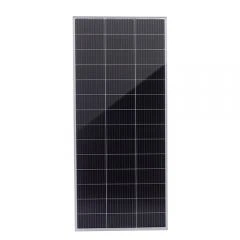

Product Recommendations for High - Altitude Applications
If you are considering a solar project in a high - altitude area, we have a range of PERC solar modules to meet your needs. Our 100W Solar Panels for RV Campers are a great choice for small - scale applications such as RVs or off - grid cabins in high - altitude regions. They are lightweight, easy to install, and can provide sufficient power for basic electrical needs.
For larger solar power plants in high - altitude areas, our Flexible Solar Module](/solar - panels/flexible - solar - module.html) are an excellent option. These flexible panels can be easily installed on curved surfaces or irregular terrains, which are common in high - altitude landscapes. They are also more resistant to mechanical stress and can adapt well to the harsh environmental conditions.
In addition, we also offer Non - standard Solar Panel that can be customized according to the specific requirements of high - altitude solar projects. Whether you need a specific size, power output, or performance parameter, our non - standard solar panels can be tailored to meet your needs.
Conclusion
In conclusion, PERC solar modules are well - suited for high - altitude conditions. Their high efficiency, low temperature coefficient, and UV resistance make them capable of generating more electricity and withstanding the harsh environmental factors in high - altitude regions. However, challenges such as mechanical stress and installation and maintenance need to be carefully addressed.
If you are planning a solar project in a high - altitude area, we encourage you to consider our PERC solar modules. Our team of experts is ready to provide you with professional advice and support. Contact us to discuss your specific requirements and start your high - altitude solar project today.
References
- Green, M. A., Emery, K., Hishikawa, Y., Warta, W., & Dunlop, E. D. (2019). Solar cell efficiency tables (version 53). Progress in Photovoltaics: Research and Applications, 27(2), 155 - 162.
- Jain, H., & Kapoor, A. (2017). Temperature coefficient of PV modules: A review of developments. Renewable and Sustainable Energy Reviews, 79, 732 - 744.